
 EN
EN CN
CN
Blog
What Is Modified Citrus Pectin?Health Benefits, Applications and Choices
Discover the health benefits of Modified Citrus Pectin (MCP). Learn how this powerful dietary supplement supports gut health, immunity, and heavy metal detox.
 July 21, 2026
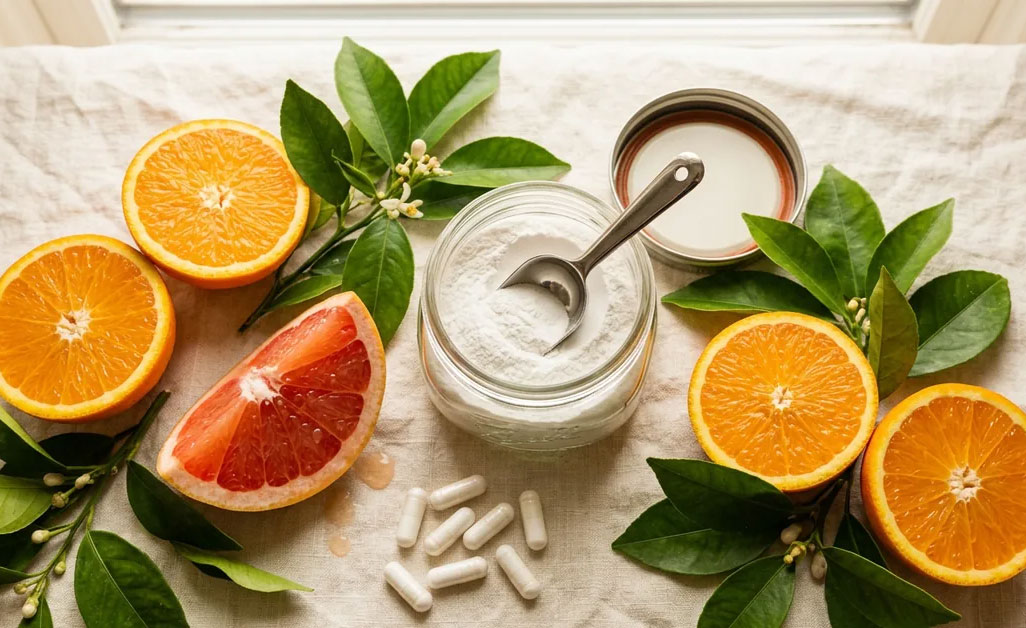
Modified citrus pectin (MCP) has emerged as a popular dietary supplement derived from citrus fruit peels, attracting attention for its potential health benefits. This comprehensive guide explores what modified citrus pectin is, how it works, its potential applications.
What Is Modified Citrus Pectin?
Citrus pectin is a complex polysaccharide found in the cell walls of citrus fruits. It is a natural substance that gives fruits their structure. Modified citrus pectin, however, is created through a special process that breaks down the large pectin molecules into smaller, more easily absorbable fragments. This modification changes the physical and chemical properties of pectin, making it more bioavailable and allowing it to interact with the body in unique ways.
The modification process typically involves enzymatic or chemical treatment. Enzymatic treatment uses specific enzymes to break down the pectin molecules at specific points, while chemical treatment may involve the use of acids or alkalis to alter the pectin’s structure. The result is a product that has a lower molecular weight and a different branching pattern compared to native citrus pectin.
How Modified Citrus Pectin Works
The key to MCP’s potential therapeutic effects lies in its ability to act as a galectin-3 inhibitor. Galectin-3 is a protein that plays various roles in cellular processes, including inflammation, cell adhesion, and potentially in cancer progression. By binding to galectin-3, modified citrus pectin may interfere with certain cellular interactions that could contribute to disease processes.
The low molecular weight of MCP (typically between 10,000-20,000 daltons) allows it to:
- Pass through the intestinal barrier
- Enter systemic circulation
- Interact with target proteins like galectin-3
- Potentially influence cellular communication
Forms
Modified citrus pectin usually comes in powder form, making it easy to mix into beverages or food. It’s also available as capsules and tablets. The powder form is often preferred because it allows for flexible dosing and better integration into daily routines.
When selecting an MCP supplement, look for products that specify:
- Low molecular weight (under 20,000 daltons)
- Degree of esterification (typically less than 5%)
- Third-party testing for purity
- Clear sourcing information
Benefits of Modified Citrus Pectin (MCP)
Supports Gut Health
Modified Citrus Pectin provides your body with prebiotic fiber, which serves as food for your healthy gut bacteria. This can be particularly helpful for people that struggle with IBS.
In one study, IBS patients who took Modified Citrus Pectin increased their beneficial bifidobacteria and lowered levels of Clostridium sp, which reduced digestive symptoms such as diarrhea.
Prevents Constipation
Given what I just said, this benefit might be confusing. Yet, science shows modified citrus pectin is helpful for constipation too.
When combined with water, Modified Citrus Pectin forms a gel-like substance that moves through your intestines, stimulating bowel movements.This can be especially helpful if you’re on a detox protocol and are prone to getting ‘backed up.’
Improves Immune Function
Modified Citrus Pectin has anti-inflammatory effects and is shown to improve the function of immune cells. It has gained much attention for its potential anti-cancer properties. Modified Citrus Pectin inactivates galactin-3, a marker for heart failure and cancer that gets elevated when the body goes through disease.
There is a lot of promising Modified Citrus Pectin research touting anti-cancer benefits such as inhibiting tumor growth and increasing autophagy and apoptosis. Autophagy is how your body cleans out damaged cells, and apoptosis is cell death – both very handy when it comes to cancer.
Chelates Heavy Metals
Research suggests Modified Citrus Pectin has a chelating effect on heavy metals. It’s used in hospitals to eliminate high levels of environmental toxins safely and gently.
For example, in one study of children with lead toxicity, Modified Citrus Pectin reduced lead levels in the blood by 161% in just four weeks.
Protects Your Brain
Keeping your blood-brain barrier (BBB) functioning properly is key to optimal brain health. Blood-brain barrier disruption plays a role in developing neurodegenerative diseases such as Alzheimer’s and Parkinson’s disease.
Fortunately, Modified Citrus Pectin may help. A recent animal study found that Modified Citrus Pectin prevented blood-brain barrier disruption in rats recovering from stroke by reducing galactin-3. High levels of galactin-3 are linked with an increased risk of cognitive impairment.
Applications of Modified Citrus Pectin
Nutraceuticals & Dietary Supplements
Modified Citrus Pectin is predominantly used as a functional ingredient in health supplements for its ability to bind and eliminate toxic heavy metals safely (like lead and mercury) without stripping essential minerals. It is also widely formulated into immune-support products.
Cosmetics
Modified Citrus Pectin is utilized in anti-aging and skincare formulations for its moisture-retention, film-forming, and anti-radiation properties.
Pharmaceuticals & Drug Delivery
Because of its biocompatibility, it is used as an excipient and coating for targeted drug delivery (such as colon-targeting) and as a stabilizer in various drug formulations.
Oncology & Biomedicine
Modified Citrus Pectin acts as a natural inhibitor of Galectin-3, a protein heavily involved in tumor growth, cancer metastasis, and inflammation. It is increasingly integrated into supportive cancer therapies and adjunct treatments to mitigate chemotherapy side effects.
Choosing Quality MCP Supplements
When selecting a modified citrus pectin supplement, consider these factors:
- Molecular Weight: Look for products specifying low molecular weight
- Source: Choose reputable manufacturers with transparent sourcing
- Testing: Select products with third-party purity testing
- Form: Consider whether powder, capsules, or tablets work best for your lifestyle
FAQ
How is modified citrus pectin different from regular pectin?
Modified citrus pectin is broken into fragments under 13 to 15 kDa with less than 5% esterification, while native citrus pectin runs 60 to 300 kDa. That smaller size lets MCP cross the gut wall and act systemically on galectin-3. Regular pectin stays in the gut as fiber and only binds cholesterol locally. The processing is enzymatic and pH-controlled.
Is modified citrus pectin safe and what are the side effects?
Modified citrus pectin is well tolerated in human trials, with no major toxicities reported even at 14.4 g/day for 12 months. The most common complaint is mild digestive upset or bloating in the first 7 days. Because MCP binds minerals, pair higher doses with mineral repletion. Pregnant women and those on chelation therapy should consult a clinician first.
What should you look for in a modified citrus pectin supplement?
Choose a modified citrus pectin with verified low molecular weight under 15 kDa and degree of esterification below 5%. Ask for a certificate of analysis confirming enzymatic processing, not generic heat or acid treatment. Third-party testing and a clear per-serving amount matter most. Remedy’s vegan formula lists 1000 mg low-molecular-weight MCP per capsule.
Do natural and modified citrus pectin come from the same source?
Yes — both start from the same citrus peel, mainly orange, lemon, lime, and grapefruit. The difference is processing: modification uses controlled alkaline hydrolysis at pH 10 to 12 to shorten the chains 10x or more, dropping weight below 15,000 Da and esterification under 5%. The raw material is identical; the molecular structure is not.
If you are interested in purchasing modified citrus pectin for your business or personal use, we invite you to contact us for a detailed discussion. Our team of experts is ready to provide you with more information, answer your questions, and help you find the best solution for your needs.

Jady
Jady has over 20 years of experience in the plant extract industry and is a seasoned expert in natural plant active ingredients. She specializes in the research, analysis, and extraction of plant extracts, natural sweeteners, mushroom extracts, cosmetic ingredients, and other plant active ingredients. Jady possesses a deep understanding of international food safety standards such as FDA and EFSA, and can clearly explain complex biochemical concepts to formulators worldwide. Her expertise effectively helps brands bridge the gap between scientific research and commercial applications, focusing on developing natural health products. She excels at guiding brands to understand the specific applications of various ingredients in dietary supplements, functional foods, and cosmetics, enabling clients to more easily select suitable ingredients and find reliable solutions.


Get in Touch
If you are considering sourcing high-quality raw materials, developing new products, customizing formulas, or have any other questions, please contact us!
We are ready to provide you with high-quality raw materials, personalized formula customization, private label solutions, or any other assistance to help you embark on your brand journey!
