
 EN
EN CN
CN
Blog
What is Cooling Agent WS-23?Application and Advantages
WS-23 is a popular cooling agent used in a variety of products, particularly in food and beverages, cosmetics, and vaping. It’s known for its ability to create a cool, refreshing sensation without using menthol or mint flavors. This article mainly introduces the working mechanism, applications, advantages and disadvantages of WS-23. What is Cooling Agent WS-23?… Continue reading What is Cooling Agent WS-23?Application and Advantages
 July 17, 2026
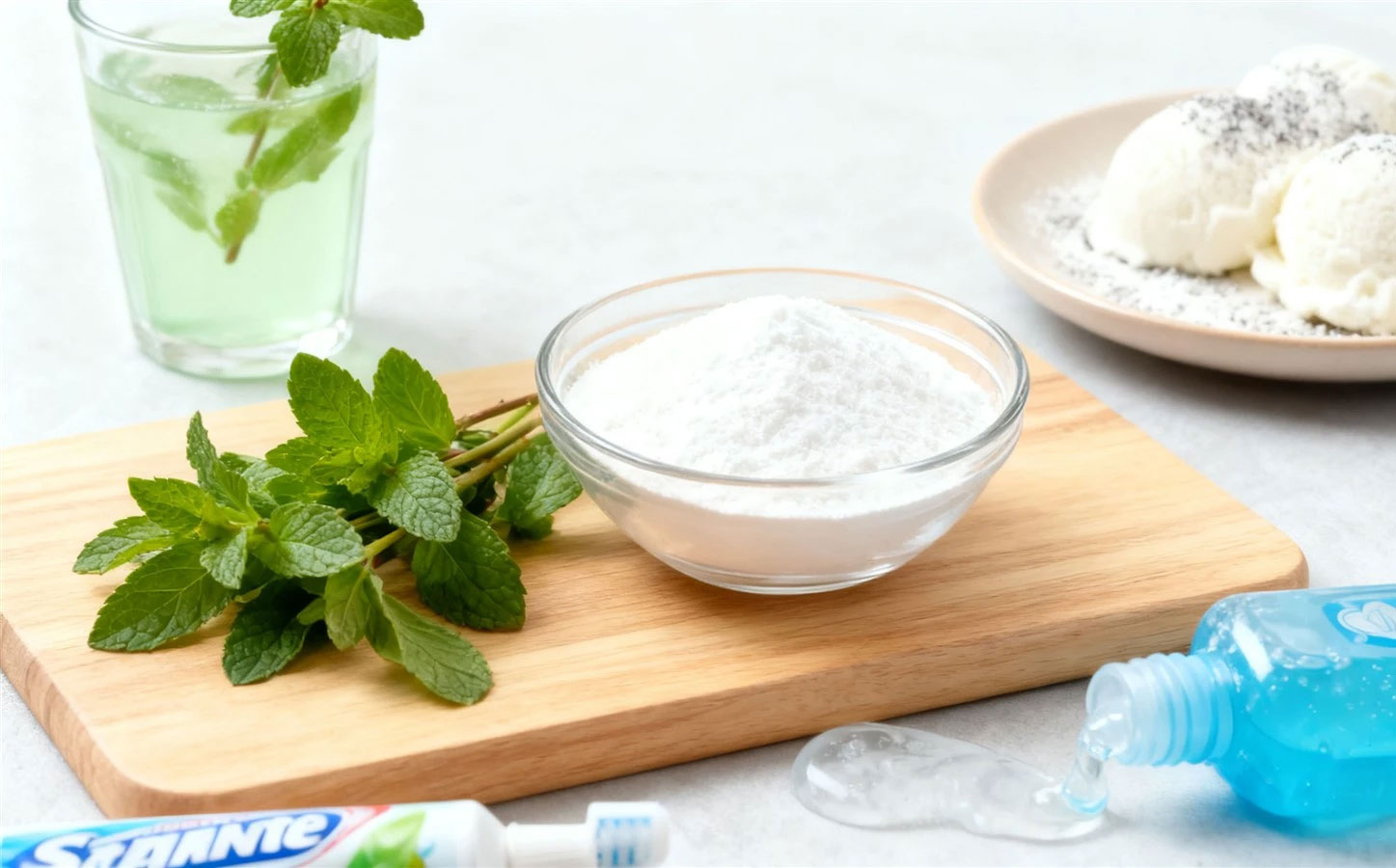
WS-23 is a popular cooling agent used in a variety of products, particularly in food and beverages, cosmetics, and vaping. It’s known for its ability to create a cool, refreshing sensation without using menthol or mint flavors. This article mainly introduces the working mechanism, applications, advantages and disadvantages of WS-23.
What is Cooling Agent WS-23?
Cooling Agent WS-23 (N,2,3-Trimethyl-2-isopropylbutanamide) is a high-purity physiological coolant utilised in food and food supplement formulations. It provides a clean, intense cooling sensation by stimulating TRPM8 receptors without the minty flavour or odour associated with menthol. This ensures the organoleptic integrity of the product remains uncompromised.
WS-23 is valued for its exceptional thermal stability, remaining effective in high-heat processes up to 200°C. It delivers a sustained cooling effect, typically lasting 15 to 30 minutes. Its high potency allows for effective use at low inclusion levels in confectionery, functional beverages, and supplements. It is readily soluble in organic solvents, facilitating integration into various matrices.
It can be used in a wider range of products compared to WS-3, especially in e-cigarettes where the application is more common. WS-3 has a cool minty flavor while WS-23 focuses on the cooling effect without the minty flavor. As the newest product in the cooling agent series, WS-23 offers a more rounded, smooth taste that can cater to the preferences of different individuals.
Cooling Agent WS-23 Mechanism of Action
Molecular Structure And Characteristics
WS-23 cooling agent possesses a unique molecular structure that contributes to its exceptional cooling properties. Its chemical formula is C12H25NO, with a molecular weight of 199.34 g/mol. This organic compound is characterized by its white crystalline appearance and low odor profile. The structural arrangement of WS-23 allows it to interact effectively with the TRPM8 receptors, resulting in the perception of coolness without the need for actual temperature reduction.
Interaction With TRPM8 Receptors
The primary mechanism of action for the WS-23 cooling agent involves its interaction with TRPM8 receptors. These receptors are ion channels that play a crucial role in temperature sensing, particularly in detecting cold stimuli. When WS-23 molecules bind to the TRPM8 receptors, they cause a conformational change in the protein structure, leading to the opening of the ion channels. This action allows an influx of calcium ions into the cells, triggering a cascade of cellular events that ultimately result in the sensation of coolness.
Comparison With Other Cooling Agents
While WS-23 shares similarities with other cooling agents like menthol and WS-3, it offers distinct advantages. Unlike menthol, WS-23 provides a cooling effect without the characteristic minty aroma or flavor, making it more versatile for applications where a neutral sensory profile is desired. Compared to WS-3, another synthetic cooling agent, WS 23 exhibits a more intense and longer-lasting cooling sensation, often at lower concentrations. This enhanced potency allows formulators to achieve the desired cooling effect with smaller amounts of the compound, potentially reducing costs and improving overall product performance.
Stability of Cooling Agent WS-23
The stability of cooling agent WS-23 is also commendable. Whether subjected to high temperatures and pressures on the production line or encountering various environmental changes during warehousing and logistics, WS-23 cooling agent maintains its original performance. This stability not only ensures consistent product quality but also brings great convenience and peace of mind to manufacturers.
Water Solubility of Cooling Agent WS-23
Another major advantage of cooling agent WS-23 is its excellent water solubility. This allows for easy application in various production environments. Whether in liquid beverages, semi-solid foods, or solid tobacco products, WS-23 cooling agent integrates perfectly, exerting its unique cooling effect. This also significantly reduces the operational difficulty and cost of the production process.
Easy Storage is another highlight of cooling agent WS-23. Unlike many food additives that require special storage conditions, WS-23 cooling agent maintains its performance stability for extended periods at room temperature. This not only simplifies warehousing management but also reduces logistics costs, bringing tangible benefits to manufacturers.
Based on these advantages, the cooling agent WS-23 has been widely used in the food, beverage, and tobacco product industries. In beverages, it adds a refreshing base to various flavored products, allowing consumers to enjoy a cool sensation while drinking. In food, it provides a lasting cooling sensation to candies, chewing gum, and other products, bringing consumers a brand-new taste experience. In tobacco products, the addition of WS-23 significantly reduces the irritation of smoke, making the smoking process smoother and more comfortable.
Cooling Agent WS-23 Application
Food and Beverage
- Confectionery: Used in hard candies, chewing gum, and chocolates to add a refreshing icy kick.
- Beverages: Used in soft drinks, juices, beers, and alcoholic drinks to give a refreshing crispness.
- Baking: Withstands high heat (up to 200°C) during processing without losing its cooling power.
Personal Care and Cosmetics
- Oral Care: Included in mouthwashes and toothpastes for a clean mouth feel without a harsh peppermint burn.
- Skin and Body: Blended into skin creams, lotions, sunscreens, and shower gels to give a soothing, cool effect on the skin.
Tobacco and Vaping
- E-Liquids: One of its most popular uses is in vaping to provide a smooth, icy throat hit.It is commonly used in electronic cigarettes, cigarettes, filters, and tobacco, and can also be used as an insect repellent.
- Traditional Tobacco: Enhances freshness in cigarette filters and modern tobacco mixes.
Pharmaceuticals
Medicines: Masks bitter tastes and adds a soothing chill to cough drops, throat lozenges, and topical medicinal creams
Advantages of WS-23:
- Milder Cooling Effect: WS-23 has a gentler, less intense cooling sensation compared to other agents like menthol, which makes it suitable for people who find menthol too harsh.
- Neutral Flavor: Unlike menthol or Koolada, which can impart a flavor to the product, WS-23 doesn’t have a strong taste, allowing for more flexibility in flavor formulations. It provides pure cooling without altering the flavor profile.
- Non-Irritating: Many users find WS-23 to be less irritating to the throat and eyes compared to menthol or even WS-3. This can make it more appealing for use in products that are meant to be inhaled, like e-liquids or throat lozenges.
- Long-Lasting Cooling: WS-23 tends to provide a more sustained cooling effect, which can be beneficial in applications where the cooling experience needs to last longer (like in beverages or cosmetics).
Disadvantages of WS-23:
- Less Intense Cooling: If you’re looking for a stronger, more “chilled” sensation, WS-23 might fall short. It’s much milder than other cooling agents like WS-5 or menthol, which can provide a more powerful cool-down effect.
- Cost: Depending on the formulation, WS-23 can be more expensive than other, more common cooling agents, which could make it less attractive for mass-market products or for products trying to cut costs.
- Sensitivity Issues: Although it is generally non-irritating, some people may still have mild sensitivity or skin reactions to WS-23, especially when used in high concentrations.
- Limited Cooling Scope: In comparison to WS-3 or WS-5, which have a more complex and layered cooling effect, WS-23 offers a more straightforward cooling experience. It lacks the depth that other agents may provide.
Comparison to Other Cooling Agents:
- Menthol: Known for its strong, sharp cooling and minty flavor. It’s more intense than WS-23 but can be irritating for some people, especially when inhaled. WS-23 doesn’t have the minty taste, making it more versatile for flavoring.
- Koolada: Similar to WS-23 in that it doesn’t impart a flavor but tends to have a more subtle cooling effect. It’s also gentler but may not last as long as WS-23. WS-23 generally provides a more consistent, longer-lasting cooling sensation.
- WS-3: Provides a moderate cooling effect, similar to WS-23 but with a slightly stronger sensation. However, WS-3 can sometimes be more irritating to the throat and eyes than WS-23.
- WS-5: A stronger, more intense cooling agent that can have a sharper effect, similar to menthol but with a more sophisticated cooling profile. It’s great for products that need a noticeable cool-down but may not be suitable for all applications due to its strength.
In summary, WS-23 is great for milder, longer-lasting cooling effects without the flavor interference of menthol or the sharpness of other agents. Its main trade-off is that it’s not as intense as some other cooling agents.
FAQs
Q: Can I mix WS-23 with other cooling agents?
A: Absolutely! In fact, professional formulators often mix WS-23 (for front-of-mouth cooling) with WS-3 (for throat hit) to create a multi-dimensional, full-mouth cooling experience.
Q: Is WS-23 heat stable?
A: Yes. WS-23 exhibits excellent thermal stability, making it suitable for baked goods, hard-boiled candies, and the heating coils of vape devices (it does not cause coil gunk like sweeteners do).

Jady
Jady has over 20 years of experience in the plant extract industry and is a seasoned expert in natural plant active ingredients. She specializes in the research, analysis, and extraction of plant extracts, natural sweeteners, mushroom extracts, cosmetic ingredients, and other plant active ingredients. Jady possesses a deep understanding of international food safety standards such as FDA and EFSA, and can clearly explain complex biochemical concepts to formulators worldwide. Her expertise effectively helps brands bridge the gap between scientific research and commercial applications, focusing on developing natural health products. She excels at guiding brands to understand the specific applications of various ingredients in dietary supplements, functional foods, and cosmetics, enabling clients to more easily select suitable ingredients and find reliable solutions.


Get in Touch
If you are considering sourcing high-quality raw materials, developing new products, customizing formulas, or have any other questions, please contact us!
We are ready to provide you with high-quality raw materials, personalized formula customization, private label solutions, or any other assistance to help you embark on your brand journey!
