
 EN
EN CN
CN
Blog
Rice Bran Wax:A Natural, Sustainable Alternative To Synthetic Waxes
Rice is the world’s most normal crop and staple nourishment for billions of individuals, yet an enormous piece of the rice plant is regularly discarded. Imagine a scenario where these unrefined materials could be utilized, all things being equal. Move forward rice bran wax, a manageable choice to beeswax and other plant-based waxes. What is… Continue reading Rice Bran Wax:A Natural, Sustainable Alternative To Synthetic Waxes
 September 18, 2026
Rice is the world’s most normal crop and staple nourishment for billions of individuals, yet an enormous piece of the rice plant is regularly discarded. Imagine a scenario where these unrefined materials could be utilized, all things being equal. Move forward rice bran wax, a manageable choice to beeswax and other plant-based waxes.
What is Rice Bran Wax?
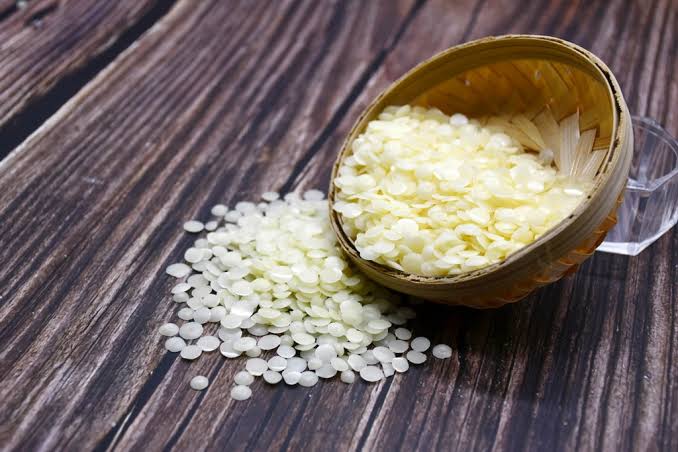
It’s a natural substance derived from the outer layers of rice grains (Oryza sativa). It is a byproduct of the rice bran oil industry, obtained through extraction and de-waxing processes. This pale-yellow, granular substance has a high melting point of 77-86°C, making it a versatile ingredient in various applications.
The composition of refined rice bran wax includes long-chain saturated esters (C46-C62), fatty alcohols (C20-C36), and fatty acids (C20-C26). It also contains phospholipids, phytosterols, and squalene, contributing to its binding, coating, gelling, and texturizing properties. The main components are aliphatic acids, such as palmitic, behenic, and lignoceric acids, along with higher alcohol esters like ceryl and melissyl alcohols.
Rice husk wax is often used as a substitute for carnauba wax due to its similar characteristics and sustainability credentials. Its versatility makes it valuable in cosmetics, personal care products, food applications, and industrial processes.
Chemical Composition of Rice Bran
Rice bran wax’s chemical makeup sets it apart from other waxes. High molecular weight monoesters, ranging from C-46 to C-66, comprise its primary structure. The refined product contains 99% monoesters, while aliphatic aldehydes, fatty alcohols, and free fatty acids form the remainder. The wax’s core components include esters of fatty acids with carbon numbers 16-32 and fatty alcohols ranging from carbon numbers 24-38.
Rice bran wax is primarily composed of:
- Aliphatic acids (wax acids):
-
-
- Palmitic acid (C16) – Contributes to the wax’s stability and texture.
- Behenic acid (C22) – Enhances hydrophobic properties.
- Lignoceric acid (C24) – Provides structural integrity and hardness.
-
- Higher alcohol esters:
-
-
- Ceryl alcohol (C26) – Improves emulsification and binding properties.
- Melissyl alcohol (C30) – Enhances smoothness and oil retention.
-
- Additional constituents:
-
- Free fatty acids (palmitic acid) – Supports moisture retention.
- Squalene – Offers antioxidant benefits, particularly in cosmetic applications.
- Phospholipids – Improve emulsification and stability in formulations.
Advantages of Rice Bran Wax
- Natural & plant-based → sustainable alternative to synthetic waxes.
- Substitute for Carnauba Wax, Beeswax & Candelilla Wax → similar properties.
- Long shelf life and stable performance across multiple applications.
- Sustainable → Derived as a byproduct of rice bran oil production — biodegradable, non-GMO, and fully traceable to source
- Versatile → High melting point (77–86°C) makes it suitable for cosmetics, food coatings, pharma, and industrial applications
- Low Allergenicity → Non-comedogenic and skin-safe — widely used in clean-label cosmetic and pharmaceutical formulations
From Rice Fields to Industry: What Makes Rice Bran Wax Unique?
Rice bran waxis a vegetable-derived wax obtained from rice bran oil processing. This wax offers a biodegradable option with functional properties suited to specific applications, complementing the broader range of available wax materials. Here’s why it stands out:
- Unique Fatty Acid Composition:Rice bran wax comprises a unique blend of saturated and unsaturated fatty acids, along with unsaponifiable matter such as oryzanol, which contributes to its beneficial properties.
- High Melting Point:Compared to other natural waxes, such as beeswax,rice bran wax has a relatively high melting point, ranging from 77 to 86°C, making it ideal for applications requiring temperature stability and hardness.
- Emulsifying and Binding Properties: It acts as an excellent emulsifier and binding agent, improving the texture, stability, and shelf life of various products.
- Skin-Conditioning Benefits:Rice bran wax is renowned for its moisturising, emollient, and protective properties, making it a highly sought-after ingredient in personal care products.
- Strong oil-binding capability:It is ideal for cosmetics, food, and pharmaceutical formulations.
- Non-toxic and hypoallergenic: It ensures consumer safety across multiple applications.
- Plant-based and renewable option:This wax is derived from agricultural sources and offers a reduced carbon footprint in certain applications. It can support companies aiming to meet regulatory requirements and sustainability targets, while maintaining consistent performance.
Rice bran wax delivers excellent results that challenge common misconceptions about eco-friendly alternatives. The refinement process preserves valuable components, including policosanols, phospholipids, phytosterols, and squalene. These elements enhance the wax’s quality profile beyond its core functionality.
Its versatility allows manufacturers to replace synthetic waxes with a natural solution that enhances both performance and sustainability.
Rice bran wax is safe or not?
The US Food and Drug Administration permits rice-wheat wax to be utilized as a food added substance in the US. The substance has been surveyed by the Cosmetic Ingredient Review (CIR) Expert Panel and considered protected as surface-level fixings as utilized in current practice. Rice bran oil, in any case, is non-consumable as it contains a lot of unsaturated fats and waxes. Refined rice wheat oil has these taken out and is a famous (and safe) food fixing utilized in numerous Asian cooking styles.
Rice bran wax Applications Industry
Cosmetics & personal Care
- With consumers increasingly seeking natural and organic ingredients, cosmetic grade rice bran wax is a popular alternative to other waxes for vegan, sustainable, and natural products in the beauty and personal care industry. Rice bran wax is used in cosmetic products such as balms, lotions, creams, and hair care formulations to create a smooth and creamy consistency. It is also used as an opacifier in cosmetics and is prized for its stabilizing properties.
Food Grade Rice Bran Wax
- Food grade rice bran wax can be used as an ingredient, a coating, a thickening agent, or a texturizer in various food products. It is used as a coating for fruits and vegetables to increase their shelf life, a plasticizer in chewing gum, and to improve the structure and body of high-oil products such as margarine and shortening. In the US, it is an FDA-approved additive for use in the food industry.
Pharmaceuticals
- In the medical and pharmaceutical space, rice bran wax is used as a stabilizer or an excipient (a non-active ingredient that lends bulk or consistency to the product) in many tablet and ointment formulations. It is also an ideal lubricant in tablet manufacturing.
Chemical and Industrial
- Coatings and Inks: Used to disperse pigments in inks and coatings, enhancing tinting strength, smoothness, and abrasion resistance.Rice bran wax is used in the paints, inks, and coatings industry as an alternative to materials such as carnauba wax and montan wax. Its glossiness, smooth texture, and hardness make it ideal for these applications. It is also utilized in paper coatings and corrosion-resistant topcoats, as well as products such as car interior coatings, shoe polish, and electric insulation coatings.
- Plastic Processing: Serves as a plasticizer, stabilizer, and lubricant for PVC; also improves polymer flow and mold release efficiency.It is used as an automotive wax-based release agent and an anti-block/slip in film extrusion, among other applications.
- Fiber and Textiles: Used as a fiber processing agent to enhance the flexibility, smoothness, and luster of fabrics.
- Other Applications: Can also be used in electrical insulation materials, paper finishing agents, petroleum grease thickeners, etc.
Is Rice Bran Wax Sustainable?
Sustainability is no longer a trend but an essential factor in ingredient selection. The good news is thatrice bran wax boasts impressive credentials in this area:
- Upcycled Resource:By utilising rice bran, a byproduct of rice milling,rice bran waxpromotes resource efficiency and reduces waste. This aligns with the principles of a circular economy.
- Biodegradable and Non-Toxic:As a plant-based wax, it is biodegradable and generally recognized as non-toxic, offering properties that may be suitable for formulations where environmental considerations are a priority.
- Environmental profile:Rice bran wax is produced from agricultural byproducts and is associated with a relatively lower carbon footprint in certain manufacturing contexts.
- Support for Agricultural Communities: Rice bran wax production can create economic opportunities for rice farmers and local communities.
- Water-Efficient Production:Compared to other plant wax sources, such as carnauba,rice bran wax requires fewer water-intensive agricultural inputs.
- Low Carbon Footprint:Derived from agricultural sources, rice bran wax is not linked to fossil fuel extraction and can be used in applications focused on renewable sourcing.
- Renewable and Biodegradable: Since it comes from rice processing byproducts, it repurposes existing materials rather than requiring additional cultivation.
Despite these benefits, some challenges exist. The market lacks fair trade or organic rice bran wax options. However, it’s crucial to ensure that rice bran wax is sourced responsibly. Look for suppliers who prioritise sustainable agricultural practices, ethical labour standards, and traceability throughout the supply chain.
Although rice bran wax does require industrial processing, unlike completely unprocessed alternatives, a redeeming factor is that this energy would be used anyway during the production of rice bran oil.
Rice bran wax is leading the way toward cleaner, more environmentally responsible industrial practices in various sectors.
Conclusion
Refined rice bran wax has shown itself to be a versatile and sustainable substance with a wide range of applications across various industries. Its unique properties, including its high melting point and natural composition, make it a valuable ingredient in cosmetics, personal care products, food applications, and industrial processes. The sustainability aspects of rice bran wax, including its biodegradability and low carbon footprint, align well with global efforts to address environmental challenges and reduce reliance on harmful products.
As research continues and industries explore new ways to use rice husk wax, its potential to revolutionize product formulations and manufacturing processes becomes increasingly clear. From its use in skincare to its role in food preservation and pharmaceutical applications, rice husk wax offers a natural and effective alternative to synthetic substances. This natural marvel not only benefits various sectors but also contributes to a more sustainable and environmentally friendly approach to production and consumption

Jady
Jady has over 20 years of experience in the plant extract industry and is a seasoned expert in natural plant active ingredients. She specializes in the research, analysis, and extraction of plant extracts, natural sweeteners, mushroom extracts, cosmetic ingredients, and other plant active ingredients. Jady possesses a deep understanding of international food safety standards such as FDA and EFSA, and can clearly explain complex biochemical concepts to formulators worldwide. Her expertise effectively helps brands bridge the gap between scientific research and commercial applications, focusing on developing natural health products. She excels at guiding brands to understand the specific applications of various ingredients in dietary supplements, functional foods, and cosmetics, enabling clients to more easily select suitable ingredients and find reliable solutions.


Get in Touch
If you are considering sourcing high-quality raw materials, developing new products, customizing formulas, or have any other questions, please contact us!
We are ready to provide you with high-quality raw materials, personalized formula customization, private label solutions, or any other assistance to help you embark on your brand journey!
