
 EN
EN CN
CN
 August 25, 2026
Color does more than make food attractive: it shapes perception and influences taste expectations. Yet today’s shoppers are scrutinizing ingredient labels and looking for cleaner alternatives. Synthetic dyes are falling out of favor, replaced by natural food colouring solutions that meet the demand for transparency and wellness.
Artificial dyes have long offered bright, stable shades, but many consumers now seek no artificial dye food coloring. Concerns about synthetic additives, a rise in clean-label buying, and retailer requirements are pushing manufacturers to reformulate.
Switching to all natural food coloring helps brands build trust and keep pace with labeling trends such as dye-free and made with natural colors from plants. It is also a smart response to customer demand for foods that feel safe, sustainable, and minimally processed.
Natural food coloring
Natural food colorings are pigments derived from various plant, animal, or mineral sources that are used to enhance the appearance of food products. Natural food colors are considered safe and healthy, unlike synthetic food colors, which are chemically produced and may have negative health effects. Natural food colors are often preferred by consumers who are looking for healthier and more natural food products.
Natural food color powders are present in many everyday items like baked goods, drinks, high-quality vitamins, and even some skincare products. Worryingly, one study found that about 43% of grocery store items contained artificial colors, including most candies, fruit-flavored snacks, and drink mixes. These are items predominantly marketed toward children.
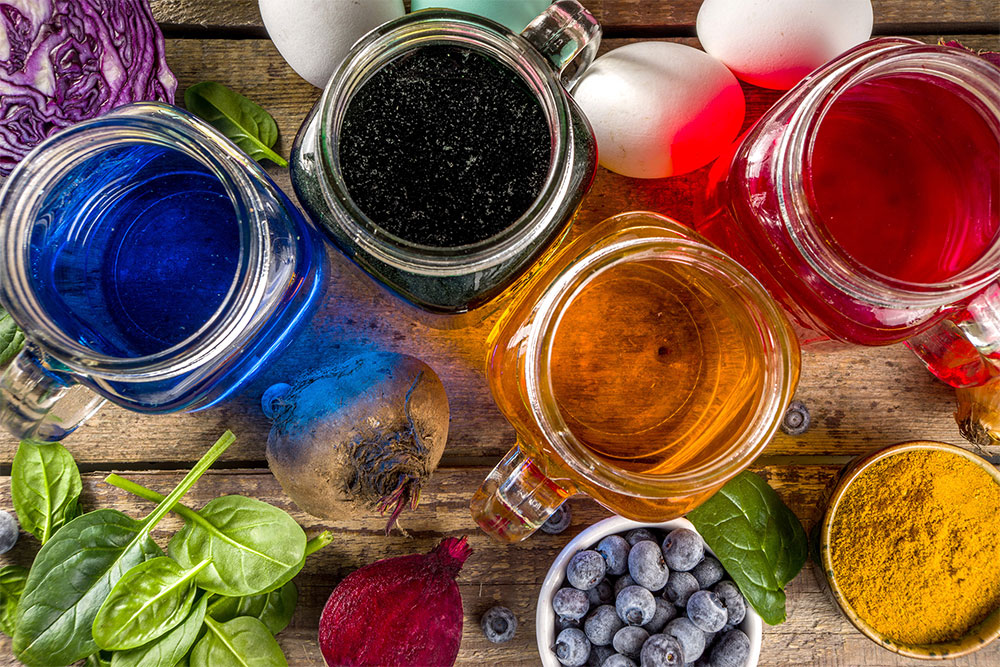
While the modern food industry relies heavily on artificial colors, more people seek natural, healthier alternatives. The good news is the demand for natural food coloring is growing as consumers are more concerned about the impact of synthetic dyes.
These natural sources are incredibly diverse, spanning the entire biological kingdom. Fruits and vegetables are prominent providers, offering a vast spectrum of colors. Spices and herbs contribute earthy and vibrant tones. Even certain minerals and microorganisms play a role, offering unique shades that broaden the natural palette. For example, annatto, derived from the seeds of the achiote tree, provides warm yellows and oranges.
What are the main natural food colorings?
There is no single natural food coloring suitable for every product. Different pigment families vary in origin, color, solubility, and behavior during processing.
| Pigment family | Main shades | Common plant sources | General characteristics |
|---|---|---|---|
| Anthocyanins | Red, purple, and bluish shades | Red grapes, black carrots, red berries | Water-soluble pigments whose color is strongly influenced by pH |
| Carotenoids | Yellow, orange, and red | Carrots, tomatoes, paprika, and other plants | Generally fat-soluble pigments, particularly sensitive to light and oxidation |
| Chlorophylls | Green | Green leafy vegetables | Color may change in the presence of acidity and during heat treatment |
| Curcumin | Intense yellow | Turmeric | A pigment with high color intensity and low water solubility |
| Betanin | Red and purple-red | Beetroot | A water-soluble pigment whose stability depends on processing conditions |
| Paprika and annatto | Orange and orange-red | Peppers and annatto seeds | Used in a variety of food preparations to achieve warm shades |
This classification helps identify which natural food colors may be considered, but it does not mean that they all behave in the same way or can be substituted for one another. The final shade depends on the interaction between the pigment and the food matrix. The same natural color may behave differently in an acidic beverage, a dairy product, a high-fat preparation, or a food subjected to baking or cooking.
Benefits of Using Natural Food Color
Natural food colors enhance the appearance of foods and offer several benefits. Let’s take a look.
- Safe and Healthy: The safety of synthetic food dyes is a controversial and ongoing discussion. Research suggests that some dyes are believed to have potential health concerns, yet they are still approved for use in our food system. Natural food colors are generally considered safe for humans and are less likely to have adverse health effects than artificial colors. While the FDA says that approved food dyes are safe, there are some cautions around reactions to Yellow 5 and how synthetic dyes may affect some children’s behavior, not to mention the potential risk of food dye allergies. While allergic reactions to food dyes are rare, they can be just as serious as any other allergy. By opting for healthy food coloring alternatives using natural sources, we can avoid unnecessary chemicals in our family’s diet.
- Kind To The Environment: As food producers step toward meeting the demand for natural and safe food colorants, sustainability is another important issue. Typically, producing artificial colors uses non-renewable sources. Natural food colors can use renewable and sustainable sources, making them a more environmentally-friendly option than their synthetic counterparts.
- Versatile: We can rely on natural food colors to create a massive range of colors. That means natural food dyes can be used in many food products like soft drinks, baked goods, and more. Finding natural food colors that are versatile and generally stable will hopefully become the norm in food manufacturing as more producers take into account consumer concerns around synthetic dyes.
- Enhanced Nutritional Value: Natural food coloring substitutes from plant-based sources provide beautiful colors and hues, but many contain vitamins and minerals for an added nutritious boost. Anthocyanin-based colors (red, blue, and purple) are found in plants like berries and plums. Research suggests anthocyanins could be an inexpensive yet effective way to control cardiovascular risk and aging, lowering cholesterol and inflammation. Plant carotenoids are responsible for yellows, oranges, and reds but may also lower the risk of developing age-related macular degeneration (AMD). AMD is an eye disease that can blur the middle part of your vision. Turmeric has long been known for its anti-inflammatory and antioxidant activity. Evidence suggests that curcumin, a compound found in turmeric, shows promise in preventing cognitive decline.
How Natural Colors Impact Formulation in Desserts & Beverages
Factors Affecting Performance
Natural colors are inherently more sensitive to environmental factors, which can alter their hue, intensity, and stability. When formulating with natural colors, dessert and beverage professionals must consider:
- pH Sensitivity: Many natural colors, such as anthocyanins from purple carrots or berries, change color based on the acidity of the product.
- Temperature Sensitivity: Heat can degrade certain natural pigments, leading to color loss or browning over time.
- Application Considerations: The fat content, moisture level, and overall composition of a dessert or beverage can affect how a natural color performs.
- Processing Method: Steps like pasteurization, freezing, or baking can impact the final color outcome.
For example, consider strawberry ice cream. A natural choice for a red hue might be purple carrot extract, but due to its pH sensitivity, it can shift to an undesirable bluish-gray in dairy-based applications. Instead, lycopene provides a consistent pinkish-red hue without the risk of color distortion. Maintaining stability and vibrancy with natural colors often requires a tailored approach—choosing the right source for the application, adjusting processing conditions, and sometimes blending multiple color sources for optimal results.
How Colors Can Impact Taste
Unlike artificial dyes, which are flavor-neutral, natural colors can subtly influence taste due to their botanical origins. While many natural pigments are virtually undetectable in the final product, some can impart earthy or bitter notes if used at higher concentrations. For example, radish-based reds can carry peppery or bitter undertones, while beet-derived colors may introduce a mild earthy sweetness.
At Green Spring, our R&D team carefully selects and balances natural color sources to ensure they complement flavors rather than interfere with them. Through extensive testing and formulation expertise, we create seamless, all-in-one solutions that maintain the perfect balance of color, taste, and functionality for desserts and beverages.
How to choose a natural food coloring
Choosing a natural food coloring should not begin solely with the desired color. The entire production cycle and the characteristics of the finished product must be analyzed.
Color shade and intensity
The first factor to define is the expected color result. Not all pigments can produce the same shades, and their performance may vary according to concentration and food composition. It is also important to establish whether the aim is to achieve a delicate color, an intense shade, a specific hue, consistent color across different production batches, or compensation for color loss caused by processing.
Formulation pH
pH can significantly alter the behavior of certain pigments. Anthocyanins, in particular, change their structure and shade according to the acidity of their environment. In acidic formulations, they generally produce more intense red shades. As pH increases, the color may shift towards purple or bluish hues, potentially accompanied by changes in stability.
Temperature and heat treatments
Pasteurization, sterilization, baking, cooking, and other heat treatments can affect color intensity and stability. The assessment should take into account the temperature reached, treatment duration, any repeated cycles, cooling times, and subsequent storage conditions. A test carried out only on the unprocessed product may therefore be insufficient.
Exposure to light and oxygen
Light and oxygen can promote degradation or color changes. The type of packaging, container transparency, headspace, and expected product life are therefore factors to consider during selection. In some cases, other ingredients in the formulation may also help protect the pigment or, conversely, make it less stable.
Solubility and matrix characteristics
Pigments may be water-soluble or fat-soluble. Their compatibility with the aqueous or fat phase of the food affects dispersion, uniformity, and performance. A beverage, cream, ice cream, and baked product have very different matrices, meaning water content, fat content, sugars, proteins, mineral salts, acidity, and thickeners must be considered.
Production process and shelf life
The coloring must retain the required properties not only during production but also throughout the intended storage period. It is advisable to assess the color immediately after addition, after processing, during storage, under actual exposure and distribution conditions, and at the end of the intended shelf life.
Regulatory compliance
Before use, it is necessary to verify that the coloring is authorized for the specific food category and that all limits, conditions of use, and labeling requirements are met. European legislation on additives establishes a positive list of authorized substances. Natural origin does not exempt the manufacturer from regulatory verification.
Need a Custom Solution?
Contact our experts to find the perfect natural color for your formulation.
Application of natural food coloring
- Beverages: Fruit- and vegetable-derived colors perform well in juices, energy drinks, teas, and alcohol alternatives.
- Confectionery: Spirulina, beet, and annatto create playful shades for gummies, hard candies, and coatings.
- Dairy and plant-based dairy: Yogurt, ice cream, and alternative milks benefit from stable, gentle coloring.
- Bakery and snacks: Turmeric and paprika enhance chips, crackers, cereals, and frostings.
- Savory foods: Sauces, soups, seasonings, and ready meals gain vibrant, label-friendly tones.
- Pet food and nutraceuticals: Plant pigments add natural appeal in treats and supplements.
Choosing the right format, powder or liquid, ensures better integration into each product type.
Conclusion
The natural pigment industry continues its rapid growth. Advances in extraction methods and stabilization technologies have resulted in more vibrant colors and greater heat resistance and pH stability in natural pigments. Consequently, the performance gap between synthetic and natural pigments is narrowing.
Brands adopting natural pigment systems now will be in a favorable position, as increasingly stringent regulations and stronger consumer preference for simple, easily identifiable ingredients further solidify their position. Green Spring’s expanding product portfolio enables manufacturers to more easily meet these evolving demands while adhering to clean label principles. Contact our team today to find the perfect color solution for your next project.