



 EN
EN CN
CN
Blog
R-Lipoic Acid vs Alpha-Lipoic Acid:What’s the difference?
Alpha lipoic acid (ALA) and R-lipoic acid (RLA) are two different forms of the antioxidant molecule lipoic acid. Although they share a similar chemical structure, they have some distinct differences in their properties and benefits. In this essay, we will explore the differences between alpha lipoic acid and R-lipoic acid. What is Alpha Lipoic Acid?… Continue reading R-Lipoic Acid vs Alpha-Lipoic Acid:What’s the difference?
 June 17, 2026
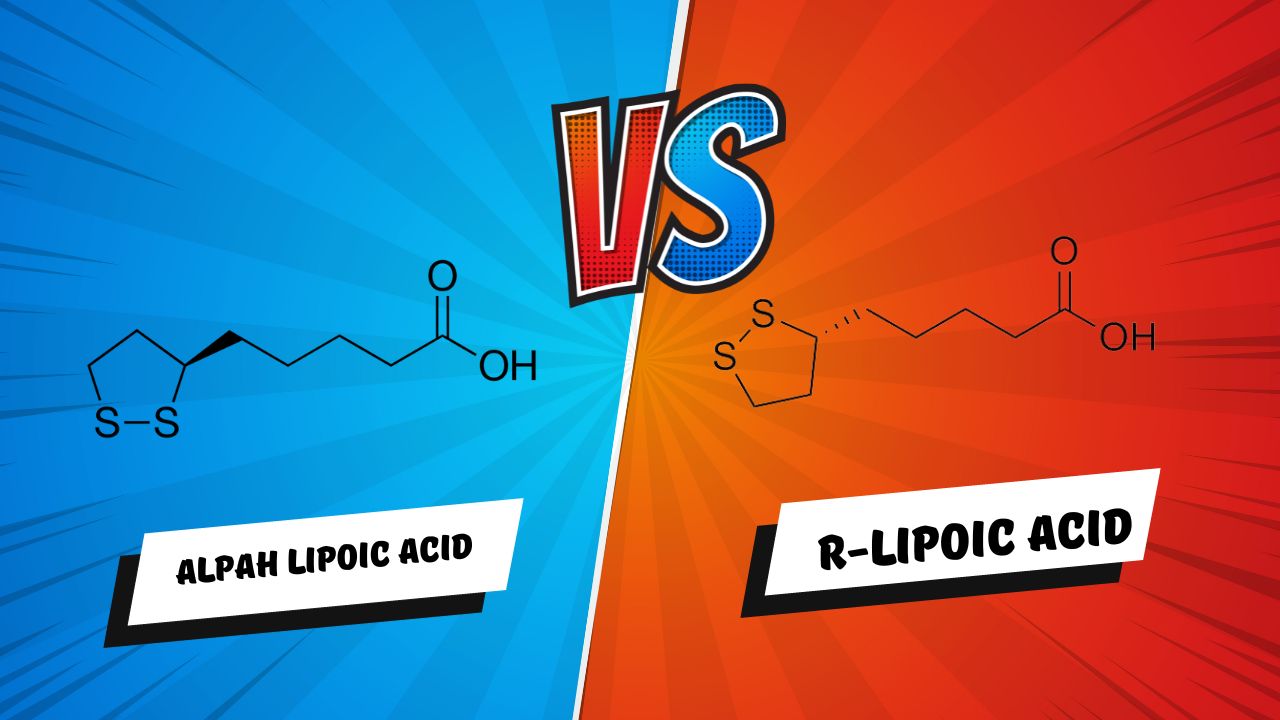
Alpha lipoic acid (ALA) and R-lipoic acid (RLA) are two different forms of the antioxidant molecule lipoic acid. Although they share a similar chemical structure, they have some distinct differences in their properties and benefits. In this essay, we will explore the differences between alpha lipoic acid and R-lipoic acid.
What is Alpha Lipoic Acid?
Alpha-lipoic acid (ALA) is a sulfur-containing organic compound, which is a vitamin-like antioxidant. It is also known as lipoic acid (LA) and thioctic acid. It consists of two enantiomers: R-lipoic acid, which is natural, and S-lipoic acid, which is unnatural. The formation of S-lipoic acid occurs in the laboratory through various chemical reactions.
Furthermore, the main function of alpha-lipoic acid is to serve as a strong antioxidant, attacking free radical formed in the body. These free radicals can damage cell including DNA, making it difficult for the body to fight against infections. On the other hand, alpha-lipoic acid aids in the regeneration of other types of antioxidants in the body as well. Also, all the cells in the body produce alpha-lipoic acid to aid in the production of energy from glucose inside mitochondria.
What is R Lipoic Acid?
R-lipoic acid (RLA) is one of the two enantiomers of alpha-lipoic acid, which is naturally produced inside both animal and plant cells. The formation of R-lipoic acid occurs inside mitochondria through a series of biochemical reactions starting from octanoic acid. Moreover, R-lipoic acid occurs inside the cell attached to protein molecules.
However, the main function of R-lipoic acid is to serve as a co-factor, assisting the enzymes, α-ketoglutarate dehydrogenase and pyruvate dehydrogenase in mitochondria. Dihydrolipoic acid is the reduced form of R-lipoic acid. It is a strong antioxidant. Due to the antioxidant properties of R-lipoic acid, it reduces the effects of aging. On the other hand, it prevents the loss of vitamin C and glutathione in the liver. These losses cause aging.
Natural Occurrence and Supplement Form
RLA is the Natural, Biologically Active Form of Lipoic Acid Found in the Body and Some Foods
You can find R-lipoic acid in certain foods, and your body synthesizes it naturally. Lipoic acid is biologically active and is crucial in many of your body’s functions. Compared to the synthetic form, RLA is more accessible to the body, making it a superior antioxidant choice. Some food sources containing RLA include organ meats, spinach, broccoli, and potatoes.
ALA is Often Seen in Supplement Form Combined with S-Lipoic Acid
Alpha-lipoic acid (ALA) is often used in supplement form, and it mostly contains a combination of R-lipoic acid and S-lipoic acid in a 50/50 ratio. The S-lipoic acid is a synthetic form created during the manufacturing process. Still, it should be noted that the R-form is the one that is biologically active in your body. However, some information suggests that S-lipoic acid may have an analgesic effect.
RLA Provides 100 mg of Pure R-Isomer Alpha-Lipoic Acid per Vegan-Friendly Capsule
Regarding supplements, paying attention to their specific form of lipoic acid is essential. R-Lipoic Acid supplements provide 100 mg of the pure R-isomer per vegan-friendly capsule, ensuring you receive the full benefits without synthetic components. Vegans who consume fewer natural food sources of RLA may benefit particularly from these supplements. By choosing R-lipoic acid supplements, you can be confident that you’re using a natural and biologically active product that benefits your body and overall health.
RLA is More Effective in Destroying Peroxynitrite Free Radicals
Despite the antioxidant properties provided by both ALA and RLA, studies have shown that R-lipoic acid is superior when breaking down peroxynitrite free radicals, which are harmful to your body. Since RLA can effectively neutralize these free radicals and promote overall vitality, it may offer enhanced protection against oxidative stress and aging than ALA.
R-Lipoic Acid vs. Alpha Lipoic Acid
R-ALA (R-alpha-lipoic acid) and ALA (alpha-lipoic acid) are closely related but not identical. Here’s a breakdown of their relationship and differences:
Alpha-Lipoic Acid (ALA). ALA is a naturally occurring compound that acts as an antioxidant. It is present in every cell of the body and helps turn glucose into energy. ALA exists in two forms (isomers), R-ALA (R-α-lipoic acid) and S-ALA (S-α-lipoic acid). When you take a standard ALA supplement, it typically contains a 50/50 mixture of R-ALA and S-ALA.
R-Alpha-Lipoic Acid (R-ALA). R-ALA is the biologically active form of ALA. It is the form that is naturally synthesized in the body and is responsible for most of the beneficial effects of ALA. R-ALA is considered to be more potent and bioavailable compared to the S-ALA isomer.
To sum it up, R-ALA is a specific, naturally occurring form of alpha-lipoic acid (ALA) that is more bioavailable and potent compared to its counterpart, S-ALA.
While they share similar properties, R-ALA is considered more potent and effective due to its higher bioavailability and efficacy.
| Characteristics | Alpha Lipoic Acid | R-Lipoic Acid |
|---|---|---|
| Definition | Alpha lipoic acid (ALA) is also known as 1,2-dithiolane-3- pentanoic acid. It is also present in the form of two enantiomers: RLA and SLA. | The r-lipoic acid (RLA) is one of the enantiomers of alpha lipoic acid. |
| Number of Molecular Orientations | The alpha lipoic acid occurs in at least two different molecular orientations as RLA and SLA. | The r-lipoic acid only occurs in the form of one molecular orientation. |
| Formation | The alpha lipoic acid formation varies depending on what form it is in. In fact, it is formed either naturally inside the mitochondria of cells or is artificially created by scientists. | The r-lipoic acid is the form of alpha lipoic acid that is formed in the mitochondria from octanoic acid involving various enzymes. |
| Function | The function of alpha lipoic acid is to help with various chemical reactions that involve the dehydrogenase enzymes, which occur in the mitochondrion. | The function of r-lipoic acid specifically is as a cofactor that helps in metabolic reactions that involve ?-ketoglutarate dehydrogenase and pyruvate dehydrogenase. |
| Health Benefits | The alpha lipoic acid appears to help in situations where a person has neural degeneration and it is helpful for diabetics.
It is of particular use in helping treat diabetic neuropathy. It also aids in situations where there is an ischemia-reperfusion injury. |
The r-lipoic acid helps prevent some of the effects of aging such as the loss of the amino acid glutathione, and vitamin C from the liver.
It also helps to improve the use and uptake of oxygen by cells. |
How Are Alpha Lipoic Acid and R-Lipoic Acid Similar?
Let’s take a look at how the dosages and supplement categories for alpha-lipoic acid (ALA) and R-lipoic acid (R-ALA) are similar, but with some distinctions due to differences in potency and bioavailability.
Dosage Comparison:
Alpha-Lipoic Acid (ALA) and R-Lipoic Acid (R-ALA) fall is the same dosage ranges. However, it is believed that R-ALA — due to its superior bioavailability — may achieve the same benefits as ALA but at a smaller dosage. General dosage guidelines to consider:
ALA Typical Dose: Common doses for ALA supplements range from 300 mg to 600 mg per day.
R-Lipoic Acid Typical Dose: Due to its higher potency, the typical dose of R-ALA is usually lower than that of the racemic ALA mixture. Common doses range from 100 mg to 300 mg per day.
These doses can vary based on specific health conditions and recommendations, with some protocols recommending slightly higher dosages for blood sugar and metabolic support.
There also exists high-dose alpha lipoic acid treatment (up to 1200 mg daily) that must be administered by a doctor. This approach is sometimes used to help diabetic patients, including for issues like diabetic peripheral neuropathy.
Distinct Advantages of ALA over R-Lipoic Acid
- Cost-Effectiveness: Taking an alpha lipoic acid dietary supplement tends to be less expensive than pure R-ALA supplements. This makes ALA a more affordable option for those seeking the benefits of lipoic acid.
- Stability: The S-ALA component in ALA supplements can help stabilize the R-ALA, making the overall supplement more stable and less prone to degradation. This stability can result in a longer shelf life for ALA supplements compared to pure R-ALA
- Availability: ALA supplements are more widely available and come in a variety of forms and dosages, making them easier to find and use according to individual preferences and needs.
- Research Backing: Although R-ALA is more potent, much of the research on the health benefits of lipoic acid has been conducted on the racemic mixture (ALA), so the combination of R-ALA and S-ALA has a well-documented history of efficacy and safety.
- Complementary Effects: Some studies suggest that the presence of both R-ALA and S-ALA might provide complementary effects that could offer certain benefits not seen with R-ALA alone. However, this is still an area of ongoing research.
Distinct Advantages of R-Lipoic Acid over ALA:
- Potency: R-ALA is the naturally occurring, biologically active form, making it more potent and effective than the synthetic S-ALA found in ALA supplements.
- Bioavailability: R-ALA has higher bioavailability, meaning it is more readily absorbed and utilized by the body compared to ALA.
- Efficacy: Due to its enhanced potency and bioavailability, R-ALA may provide quicker and more pronounced benefits than ALA.
R-Lipoic Acid vs. Alpha Lipoic Acid: Which is a better antioxidant?
R-lipoic acid is the better antioxidant due to its higher potency and bioavailability compared to alpha-lipoic acid, which is a mix of R-ALA and the less effective S-ALA. R-ALA is more efficiently absorbed and utilized by the body.
While both R-ALA and ALA offer similar health benefits, R-ALA is often considered a better antioxidant and more effective supplement overall due to its natural form and better absorption by the body.
FAQ
Is R-Lipoic Acid worth the higher price?
Yes, for those targeting blood sugar issues, nerve pain, or mitochondrial support, RLA offers superior benefits at lower doses, which may justify the cost.
Can you take ALA and RLA together?
Some supplement stacks include both, but it’s typically more efficient to take pure RLA to avoid the weaker S-isomer found in ALA blends.
Is R-Lipoic Acid natural?
Yes. RLA is the biologically active form your body naturally produces. It is extracted and stabilized for supplement use.
When is the best time to take ALA or RLA?
Take either on an empty stomach, about 30 minutes before meals, for optimal absorption. Pairing with acetyl-L-carnitine may enhance energy benefits.
Conclusion
R-Lipoic Acid (RLA) is more active than Alpha-Lipoic Acid (ALA) due to its higher bioavailability. RLA is the natural form of lipoic acid found in your body and some food sources, making it more easily recognized and utilized. Both ALA and RLA have antioxidant properties that can reduce oxidative stress, protect cells, and improve bodily functions. Supplementing with either form can contribute to a healthier lifestyle, but RLA is generally considered superior. It’s important to understand the differences between ALA and RLA when supplementing and making an informed decision.

Get in Touch
If you are considering sourcing high-quality raw materials, developing new products, customizing formulas, or have any other questions, please contact us!
We are ready to provide you with high-quality raw materials, personalized formula customization, private label solutions, or any other assistance to help you embark on your brand journey!
