
 EN
EN CN
CN
Blog
Stevia Sugar VS. Erythritol: What’s the difference?
Erythritol and stevia are natural sweeteners that are gaining popularity. Today, a healthy lifestyle is quite trendy, and many people prefer these products instead of regular sugar. But often fans of proper nutrition wonder which is better: stevia or erythritol. Below, we will introduce the features of these products, the differences between them, and which… Continue reading Stevia Sugar VS. Erythritol: What’s the difference?
 June 16, 2026
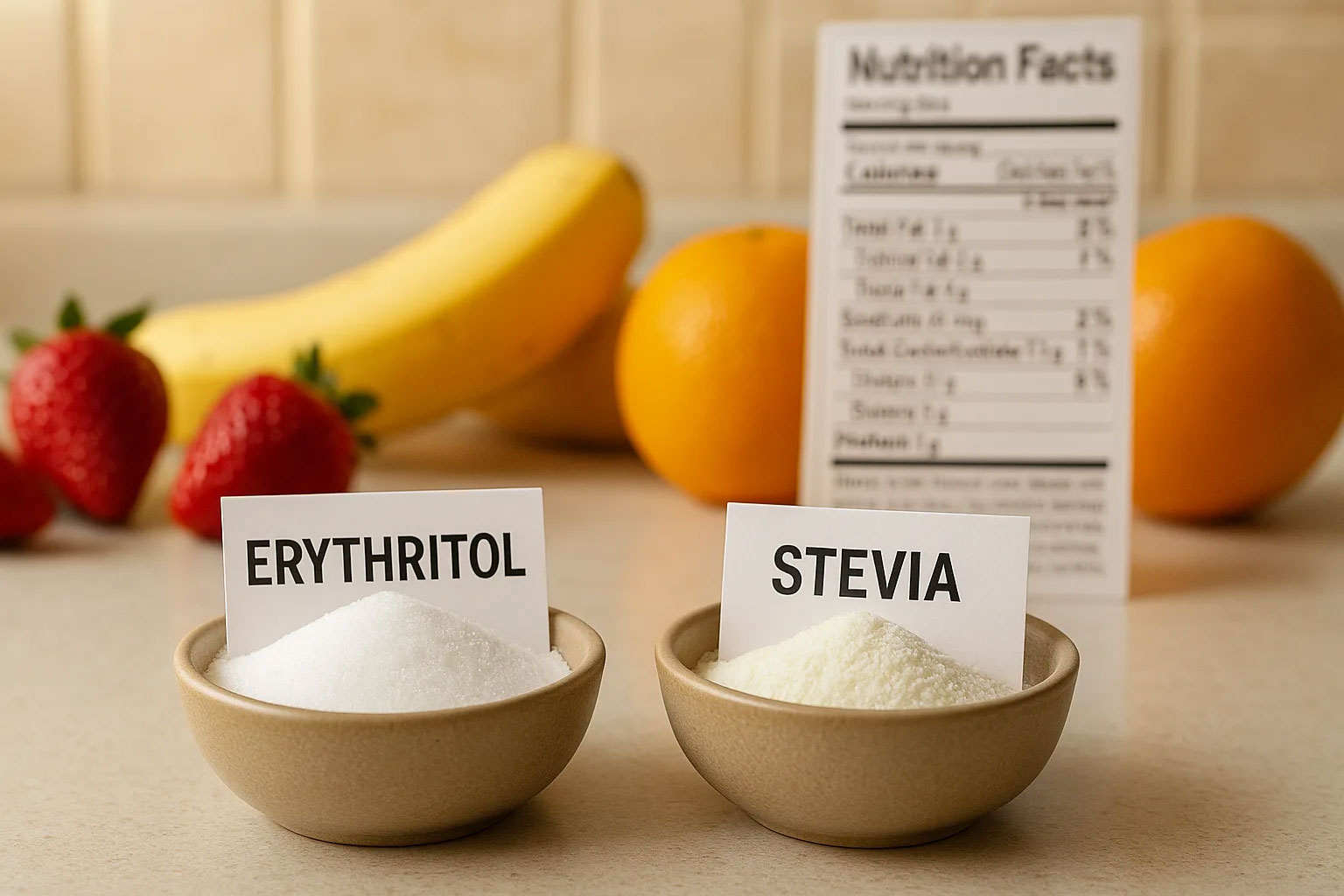
Erythritol and stevia are natural sweeteners that are gaining popularity. Today, a healthy lifestyle is quite trendy, and many people prefer these products instead of regular sugar. But often fans of proper nutrition wonder which is better: stevia or erythritol. Below, we will introduce the features of these products, the differences between them, and which one is more suitable for you.
What is Stevia Sugar ?
Stevia, derived from the leaves of the Stevia Rebaudiana plant, is a plant-based sweetener that has gained popularity as a sugar substitute. Known for its intense sweetness, Stevia’s leaves contain compounds called steviol glycosides, which contribute to its sweet taste without adding calories. Often used as a sugar alternative in various food and beverage products, Stevia has found its way into the diets of those looking to cut down on traditional sugar consumption. Beyond its sweetening properties, Stevia is appreciated for being plant-based, making it an attractive option for individuals seeking alternatives to artificial sweeteners.
What is Erythritol ?
Erythritol, often classified as a sugar alcohol, is gaining traction for its distinctive attributes. While it occurs naturally in certain fruits like pears and grapes, commercial production typically involves fermenting glucose with yeast. What sets erythritol apart is its sweet taste minus the calories – it’s practically calorie-free, well-tolerated by most people, and is known to be the most tolerable of the sugar alcohols. For those seeking a sugar reduction without compromising on sweetness, erythritol has become a popular choice. Its presence can be noted in a range of sugar-free and low-calorie products, spanning beverages to baked goods, offering a palatable alternative for those conscious of their sugar consumption.
Stevia vs erythritol: key differences
1. Taste profile
Stevia: Can have a slightly bitter or licorice-like aftertaste for some users.
Erythritol: Tastes closest to sugar but may have a cooling sensation in the mouth.
In terms of the erythritol vs stevia taste difference, erythritol is generally smoother, while stevia may require adjustment.
2. Calories and blood sugar impact
Stevia: Zero calories, does not raise blood sugar
Erythritol: Almost zero calories, minimal impact on blood glucose
For people managing diabetes or insulin sensitivity, all two are commonly used because they have little to no glycemic impact.
3. Which sweetener is healthiest?
Stevia: Natural, plant-derived, widely studied
Erythritol: Generally well-tolerated but may cause digestive issues in large amounts
Research suggests all two are safe when consumed in moderate amounts, but individual responses may vary.
4. Digestive tolerance and side effects
Stevia: Usually well tolerated, but some people may experience mild nausea or aftertaste sensitivity
Erythritol: Can cause bloating, gas, or digestive discomfort if consumed in large quantities
Among these, erythritol is the one most likely to cause digestive reactions in sensitive individuals.
5. Best zero-calorie sweetener comparison
Stevia: Best for those who prefer a plant-based, widely available option
Erythritol: Best for baking due to its sugar-like structure
Stevia vs erythritol – comparison table
| Feature | Stevia | Erythritol |
| Source | Stevia leaf (plant extract) | Sugar alcohol (from fermented glucose) |
| Sweetness | 200–300× sweeter than sugar | 60–70% as sweet as sugar |
| Calories | 0 | ~0 (very low, ~0.2 kcal/g) |
| Taste | Can have a slight bitter/licorice aftertaste | Very close to sugar, slight cooling effect |
| Best Use | Drinks, low-cal recipes, and tabletop sweetener | Baking, bulk sugar replacement |
| Digestive Effects | Generally well tolerated | May cause bloating in large amounts |
Stevia and erythritol Similarities
Both stevia and erythritol have no calories, no carbs, and you guessed it, no sugar. Also, they do not raise blood glucose levels and can still taste great.
They are an excellent alternative to sugar as they are both low in carbs.
Additionally, erythritol can reduce the absorption of fructose, which usually leads to metabolic disorders. Its antioxidant properties can assist in removing free radicals in the bloodstream.
Meanwhile, stevia has other properties that are anti-microbial, anti-fungal, anti-tumor, anti-oxidant, and anti-diabetic.
What Are the Downsides?
Stevia: Possible Concerns
According to animal studies, stevia consumption may negatively impact liver and kidney health while also raising inflammatory responses. Some evidence suggests it might alter gut microbiota, though the findings are not uniform—one 2024 study reported no significant microbial shifts after 12 weeks of daily use. Nonetheless, additional human research is essential to determine its long‑term safety, particularly when consumed in substantial quantities over prolonged periods.
Erythritol: Possible Concerns
Prolonged erythritol intake has been associated with an increased risk of heart attack and stroke, possibly due to its tendency to promote blood clotting and arterial narrowing. It may also contribute to the onset of type 2 diabetes and an increase in visceral fat. Nonetheless, current data is insufficient, and broader, more rigorous studies are needed to confirm these risks. At high doses, erythritol can cause short‑term digestive issues, including loose stools, bloating, nausea, flatulence, and abdominal discomfort.
How Do They Taste?
Erythritol and stevia are both very sweet, but stevia is sweeter than erythritol. Erythritol is about 70% as sweet as table sugar, while stevia is 200-400 times sweeter than table sugar.
Both of these sweeteners are available in granulated, powdered, and liquid form.
Are They Safe?
Erythritol and steviol glycosides (stevia extracts) are generally recognized as safe (GRAS) by the U.S. Food and Drug Administration (FDA). Still, consuming too much of these sweeteners may harm health.
The World Health Organization (WHO) and the FDA recommend keeping your intake of steviol glycosides below 4 milligrams (mg)/kg per day.
To avoid gastrointestinal (GI) side effects, it’s recommended that men and women keep daily erythritol intake under 0.66 and 0.80 g/kg, respectively.
Where can I buy erythritol and stevia?
Whatever sweetener you choose, we can provide it for you. We offer erythritol and stevia in various forms and packaging—from large packages of sweetener powder to convenient single-dose packets. We also offer free samples of a variety of sweeteners. We provide customized compound sweetener solutions, including custom packaging and labeling services. Contact us with any needs; we’re always ready to serve you.
The upshot
Choosing between stevia and erythritol comes down to taste preference, digestion, and how you plan to use the sweetener.
All two are popular low- or zero-calorie alternatives to sugar.
Stevia is widely available and plant-based.
Erythritol works best in baking, but may cause digestive issues for some.
If you’re deciding between stevia and erythritol, the best approach is to consider your personal tolerance and intended use. Many people even combine them to get the best balance of taste and performance.
In the end, the “best” sweetener is the one that fits your lifestyle, tastes good to you, and helps you consistently reduce sugar intake without discomfort.

Jady
Jady has over 20 years of experience in the plant extract industry and is a seasoned expert in natural plant active ingredients. She specializes in the research, analysis, and extraction of plant extracts, natural sweeteners, mushroom extracts, cosmetic ingredients, and other plant active ingredients. Jady possesses a deep understanding of international food safety standards such as FDA and EFSA, and can clearly explain complex biochemical concepts to formulators worldwide. Her expertise effectively helps brands bridge the gap between scientific research and commercial applications, focusing on developing natural health products. She excels at guiding brands to understand the specific applications of various ingredients in dietary supplements, functional foods, and cosmetics, enabling clients to more easily select suitable ingredients and find reliable solutions.


Get in Touch
If you are considering sourcing high-quality raw materials, developing new products, customizing formulas, or have any other questions, please contact us!
We are ready to provide you with high-quality raw materials, personalized formula customization, private label solutions, or any other assistance to help you embark on your brand journey!
