
 EN
EN CN
CN
Blog
Monk Fruit Sweeteners vs. Stevia Sugar: Which Sweetener Is Better?
Compare monk fruit vs stevia. Explore their pros, cons, and blood sugar effects to choose the best natural sweetener.
 May 19, 2026
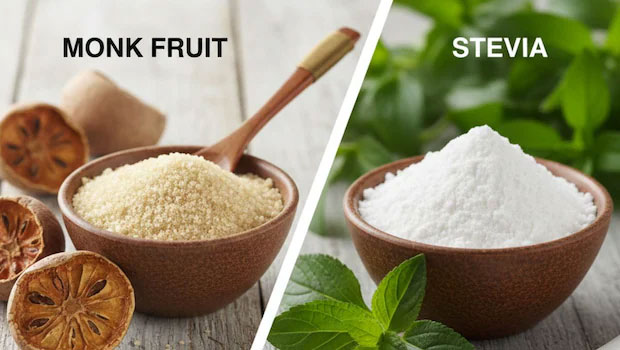
Monk fruit sweetener and stevia sugar are both zero-calorie sweetener alternatives that avoid the blood sugar spikes that occur after consuming sucrose. They are commonly used to flavor foods and beverages.
You may have seen them on the ingredient lists of low-sugar foods in supermarkets. But what are the differences between monk fruit sweetener and stevia sugar? Which one should we choose?
This article will reveal the differences between monk fruit sweetener and stevia sugar, helping you understand their distinctions and make the right choice based on your health needs.
What Is Monk Fruit Sweetener?
Monk fruit is known throughout Southeast Asia as Luo Han Guo. It has been used in Traditional Chinese Medicine (TCM) as an herbal tonic since the 13th century. According to TCM, monk fruit has “cooling properties” and works as a general palliative.
Fresh monk fruit is not sugar-free. It contains glucose and fructose. It also contains several mogrosides, the most abundant and sweetest of which is mogroside V. Mogrosides have antioxidant properties and impart calorie-free sweetness. They cannot be digested or absorbed by the body.
Mogrosides have antioxidant properties and impart calorie-free sweetness.
Monk fruit sweeteners are made by crushing the fruit, removing the seeds, and extracting the juice. Processing removes the glucose and fructose, leaving the calorie-free, sweet mogrosides. Monk fruit sweetener is often found in granules or powder forms. It may be minimally processed, containing some glucose or fructose and a small number of calories. It may also be fully processed and contain zero sugars or calories.
The extract contains substances called mogrosides which contain zero calories and are 150 – 200 times sweeter than table sugar.
Monk fruit extract is often mixed with other sugars to balance its sweetness. These added ingredients may include inulin fiber, other sweeteners (such as erythritol or xylitol), or even regular sugar.
What Is Stevia Sugar?
Stevia is a popular calorie-free sweetener. The stevia plant is an herb native to South America. Its leaves are naturally sweet and calorie-free. Stevia has been used for thousands of years in various South American cultures as both a sweetener and as medicine.
Two steviol glycosides—stevioside and rebaudioside—provide the sweetening properties of stevia.
- Stevioside is 250 to 300 times sweeter than sugar.
- Rebaudioside is 350 to 450 times sweeter than sugar.
About one-fourth teaspoon of natural ground stevia leaves is equivalent to one teaspoon of sugar. However, if you’re using pure stevia extract, just 1/80th of a teaspoon is equivalent.
Stevioside tends to have a bitter aftertaste. Many products only contain rebaudioside because it is less bitter.
Stevia extract is often combined with bulking ingredients to make measuring, pouring, and usability better. These can include sugar alcohols like erythritol or xylitol, as well as processed corn-based sweeteners like dextrose and maltodextrin.
The Food and Drug Administration (FDA) has determined that only processed and refined stevia products are Generally Recognized As Safe (GRAS).
Effects of monk fruit sweetener and stevia sugaron blood sugar
Neither Raises Blood Sugar
-
Monk Fruit Sweetness
Monk fruit sweetness comes from zero-calorie mogroside compounds that the body doesn’t recognize as sugar:
Animal research shows monk fruit doesn’t raise blood sugar or trigger insulin secretion as table sugar does. Therefore, researchers believe that monk fruit may benefit people with diabetes.
In addition to its effects on blood sugar, replacing table sugar with monk fruit may improve lipid profiles (fats, waxes, and sterols in blood) and liver health, which may help prevent type 2 diabetes. However, more research is needed.
-
Stevia Sugar
Stevia also does not significantly raise blood sugar or insulin levels:
Several animal and human studies have found that replacing table sugar with stevia may help lower blood sugar levels.
According to one meta-analysis, stevia may reduce blood sugar levels within one to four months. Further research is needed to determine the long-term effects of stevia on blood sugar and diabetes management.
Pros Of Monk Fruit Sweetener
There are various benefits to using monk fruit as a sweetener.
These include:
- No Impact On Blood Sugar Levels
There is no sugar in monk fruit extract, which means that consuming pure monk fruit sweeteners will not affect blood sugar levels in the way that table sugar does.
This makes monk fruit a good option for people with diabetes who must carefully monitor their blood sugar levels.
Some research in animals suggests that mogrosides may even play a role in controlling blood sugar levels. (Source)
- No Calories Or Carbohydrates
Monkfruit extract does not contain any calories or carbohydrates, making it a useful alternative for those who are aiming to lose weight and people on low-carbohydrate diets.
- No Negative Side Effects
Unlike some artificial sweeteners, there is currently no evidence to show that monk fruit has any negative side effects.
The FDA considers monk fruit sweeteners as “generally recognized as safe”.
- Antioxidant Effects
There have been test tube studies showing monk fruit mogrosides having antioxidant effects by playing a role in reducing oxidative stress.
However, further research is still needed to understand whether these effects occur in humans.
Also, it has to be considered whether eating the processed sweetener as part of a food product would have the same benefits, but some research suggests it might.
Cons Of Monk Fruit Sweetener
Some reasons people may not want to opt for monk fruit as a sweetener.
These include:
- Availability And Cost
Monk fruit is difficult to grow and expensive to export. This makes it harder to come by than other sweeteners, and often more expensive.
- Taste
Some people find the taste of monk fruit sweeteners unpleasant as it does differ in table to regular table sugar.
Monk fruit sweeteners can also leave an aftertaste.
- Additional Ingredients
Some manufacturers balance the taste of monk fruit by mixing it with other sugars, such as maltodextrin or dextrose. This may alter the sweetener’s nutritional profile making it undesirable and even unsafe for some people.
Pros Of Stevia Sugar
Many of the benefits of stevia are similar to those of monk fruit:
- No impact on blood sugar levels
- No calories or carbohydrates
- Availability
Though less widely available than sugar and some other artificial sweeteners, stevia is easier to come by than monk fruit sweetener.
Cons Of Stevia Sugar
- Cost
As with monk fruit sweeteners, stevia is generally more expensive than sugar and other sweeteners.
- Taste
Similarly to monk fruit, some people do not like the taste of stevia as it is very distinct from table sugar.
- Other Ingredients
Again, stevia is often mixed with other sweeteners to balance its taste which can alter the nutritional profile making it unappealing or unsafe for some people.
Stevia is also heavily refined due to FDA permissions only allowing the use of highly purified stevia products in the U.S.
- Side Effects
Some people do report unpleasant gastrointestinal symptoms after consuming stevia products. This is due to sugar alcohols which are sometimes added to stevia products.
Although hypersensitivity to sugar alcohol is rare, symptoms can include: nausea, vomiting, indigestion, cramping, and bloating.
- Allergy
There have been some reported cases of stevia allergy, although very few.
Both the FDA and European Commission conclude that the number of individuals who are hypersensitive to stevia or at a risk of having an allergic response is low.
People with allergies to other plants in the Asteraceae family, such as daisies, chrysanthemums, or marigold, should avoid stevia.
What Do These Sweeteners Have in Common?
Despite their differences, monk fruit and stevia share several similarities:
- Zero calories: Both are calorie-free and sugar-free, making them a good option for people looking to lower their sugar and calorie intake.
- Low glycemic impact: Stevia and monk fruit are blood-sugar-friendly, making them good options for people with diabetes.
- FDA-approved: Both are GRAS-approved for use in foods and beverages in the United States, with no serious side effects reported when consumed in normal amounts.
- Use: Both sweeteners are heat-stable, so you can use them in baking and cooking. They can also be used to sweeten beverages like tea and coffee.
Who Should Use Which?
Although both stevia and monk fruit sweeteners are considered “natural zero-calorie sweeteners,” they’re not suitable for exactly the same people. Your blood sugar balance, gut sensitivity, hormones, and even lifestyle habits can influence which one works best for you.
There’s no “best sweetener” — only the one that fits you best.
1. For those with diabetes or insulin resistance
The main question here is: “Will it raise my blood sugar?” The good news — neither stevia nor monk fruit will. However, studies suggest that monk fruit’s mogrosides may offer stronger antioxidant support and help protect pancreatic β-cells. That makes monk fruit sweetener a great first choice.
2. For women managing weight or fat loss
When you’re cutting sugar, you also want to avoid sweeteners that trigger more cravings. Stevia has a crisp, refreshing sweetness that’s ideal for cold drinks and teas. Monk fruit tastes closer to sugar and works beautifully in baking. Use both alternately to keep your taste buds happy while staying on track.
3. For those with a sensitive stomach
Stevia may slightly affect gut bacteria in some people, leading to mild bloating or changes in digestion. Monk fruit sweetener tends to be gentler on the gut, making it a better option if you often experience bloating or have a weak digestive system.
4. For women in perimenopause or with inflammation concerns
During perimenopause, insulin sensitivity and oxidative stress often change. Monk fruit’s natural antioxidants can help reduce free radicals and advanced glycation reactions, making it a calm and supportive sweetener for anti-glycation diets.
5. For those with high blood pressure or cardiovascular risk
Some studies suggest that stevia’s natural steviosides may mildly support blood pressure regulation. If you enjoy tea or daily beverages, adding a small amount of stevia can be a smart choice — just remember to stay within safe daily limits.
How to Choose & Use Natural Sweeteners
Whether you’re managing blood sugar, losing weight, or simply trying to avoid artificial sweeteners, learning how to choose and use your sweeteners wisely matters far more than just spotting “zero calorie” or “natural” on the label.
1. How to Choose
- Check the ingredient list: Choose products made from 100% pure monk fruit extract or high-purity stevia extract (Rebaudioside A).
- Avoid blends with fillers: Sweeteners that include maltodextrin, glucose, or sorbitol can raise blood sugar and cause bloating.
- Look for purity levels: High-quality monk fruit sweeteners contain more Mogroside V, while premium stevia uses high-purity Reb-A for better stability and less bitterness.
- Read the label carefully: “Natural sweetener” doesn’t always mean “no additives.” Look for products labeled Non-GMO, No Fillers, and Zero Calories.
2. How to Use Them
- For drinks: Just 1/5 teaspoon of stevia or monk fruit sweetener is enough to sweeten a cup of coffee or tea.
- For baking: When replacing sugar, use about 1/8–1/10 of the amount (adjust depending on sweetness strength).
- Mix and match: A blend of stevia and erythritol gives a more natural sugar-like taste. Monk fruit works well in hot drinks, sauces, and baked goods.
- Control frequency: Even natural sweeteners should be limited to three to four uses per day to keep your taste buds sensitive to natural flavors.
3. Precautions
- Not for long-term heavy use by children or pregnant women: While generally safe, there’s limited research on prolonged use—whole foods are still the best choice.
- Do not mix with artificial sweeteners: Avoid aspartame, sucralose, or other synthetics that may affect gut bacteria and taste regulation.
- Beware of “sweet compensation”: Using low-calorie sweeteners doesn’t mean you can freely eat sweets; sweetness still triggers the brain’s reward pathways.
Summary
Monk fruit and stevia are commonly used sugar alternatives. Both derived from plants, these extracts sweeten foods and beverages without adding calories, carbohydrates, or sugar.
Overall, monk fruit and stevia have very similar properties. For most people, the choice between them simply comes down to personal preference.

Jady
Jady has over 20 years of experience in the plant extract industry and is a seasoned expert in natural plant active ingredients. She specializes in the research, analysis, and extraction of plant extracts, natural sweeteners, mushroom extracts, cosmetic ingredients, and other plant active ingredients. Jady possesses a deep understanding of international food safety standards such as FDA and EFSA, and can clearly explain complex biochemical concepts to formulators worldwide. Her expertise effectively helps brands bridge the gap between scientific research and commercial applications, focusing on developing natural health products. She excels at guiding brands to understand the specific applications of various ingredients in dietary supplements, functional foods, and cosmetics, enabling clients to more easily select suitable ingredients and find reliable solutions.


Get in Touch
If you are considering sourcing high-quality raw materials, developing new products, customizing formulas, or have any other questions, please contact us!
We are ready to provide you with high-quality raw materials, personalized formula customization, private label solutions, or any other assistance to help you embark on your brand journey!
